Carpenter in Colorado Springs, CO: Wood Rot, Structure & Finish Work
Colorado Springs Carpentry is a local residential carpentry shop serving Colorado Springs, Fountain, Woodland Park, Manitou Springs, Monument and the surrounding areas. We work on the full range of wood carpentry: structural repair of rotted and insect-damaged framing, floor joist and subfloor work, beam replacement and load-bearing alterations, new framing, and finish carpentry from trim and doors to custom built-ins and cabinetry. Homeowners searching for a carpenter near me in Colorado Springs often come to us because the same carpenters who estimate the work do the installation, and because we know the building stock here, Victorian mansions in the Old North End, mid-century ranch homes across Knob Hill, hillside cottages in Manitou and Old Colorado City, and the newer subdivisions in Briargate and Stetson Hills.
The houses in this region have been settling and weathering for a century or more. Our work begins with understanding why a failure happened, whether it can be repaired or must be replaced, and how to close the water path that caused it in the first place. Call (719) 368-8936 or request a free wood rot inspection to discuss your project.
Why Wood Fails in Colorado Springs, and How We Read It
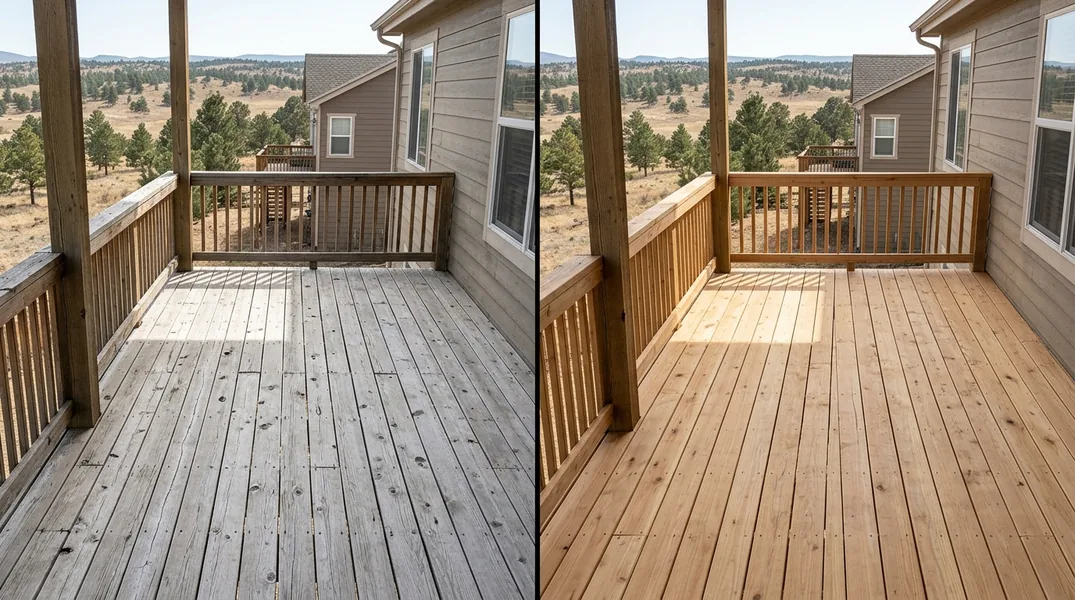
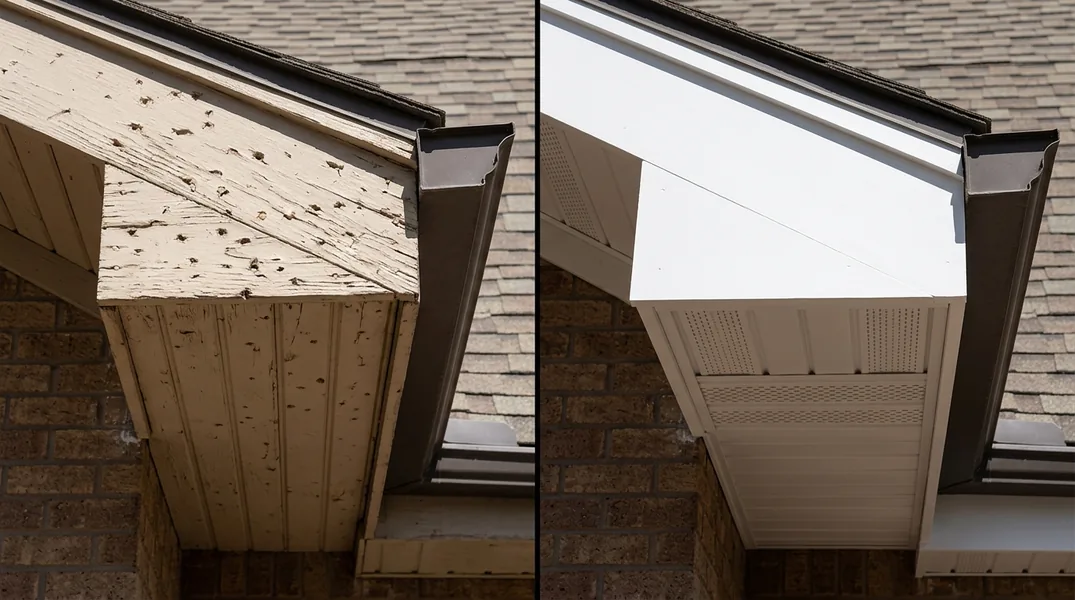
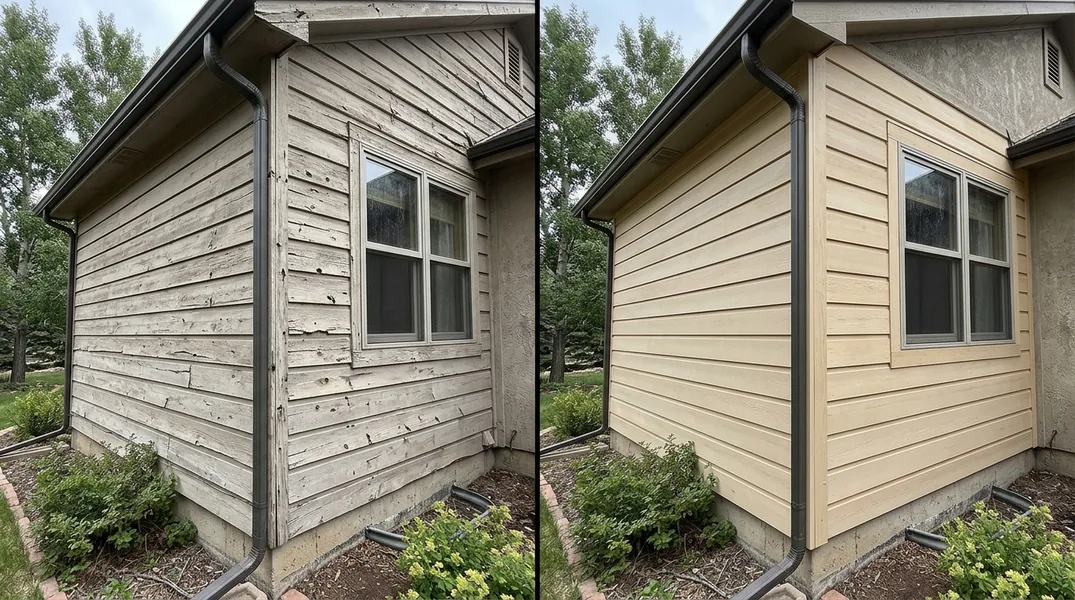
Wood fails in Colorado Springs for reasons distinct from the humid-rot cities of the South and East. At 6,000 feet on the Front Range, the climate is high-altitude and semi-arid: intense UV and extreme dryness check and bleach exterior wood rather than rotting it outright. Freeze-thaw cycles are sharp and dry. Termites, which require warmth and sustained moisture, are essentially absent at this altitude and aridity. The real wood-damage driver here is Colorado's Hail Alley status, some of the most frequent and severe hailstorms in the country batter siding, fascia, decks and trim nearly every spring and summer. That impact damage, combined with the few moisture events that do occur (snowmelt, roof leaks, condensation at sills and ledgers, and standing water around deck footings), creates the conditions where wood rot takes hold.
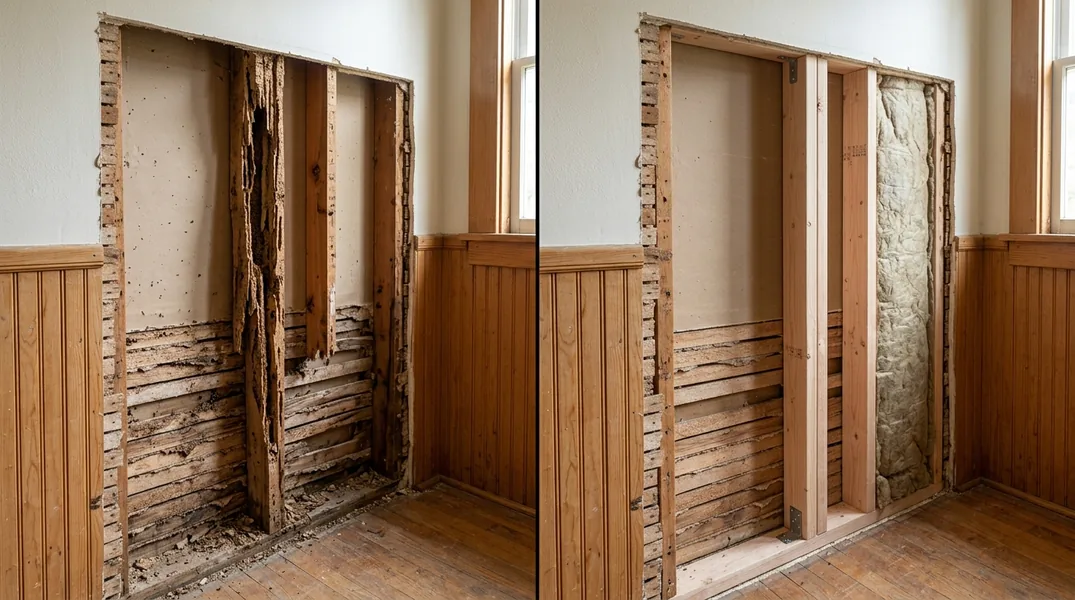
Wood rot is a fungus that requires sustained moisture to colonize sound wood. When water sits at a sill plate, window sill, threshold or deck ledger, places where the design or maintenance has allowed water to linger, the fungus breaks down the cell structure from inside while the paint film on the surface may still look sound. We assess rot by probing to find where sound wood begins, checking the framing behind the visible surface, and tracing the water path that fed it. A member with cosmetic surface decay over a sound core can be cut out and rebuilt. A member that has lost its structural section gets replaced. And if the water source is not closed, the repair fails again. Filler over rot is not a repair.
On termite damage, we work from the homeowner's own pest inspection report. We repair and replace the wood that insects have damaged or hollowed. We do not treat, fumigate, chemically remediate or perform pest control, that is a separate regulated trade and not our scope. Call (719) 368-8936 to discuss what you have found, or request a free wood rot inspection to have us look at the damage and explain what repair or replacement makes sense.
Structural Carpentry in Colorado Springs: Joists, Beams and Settling
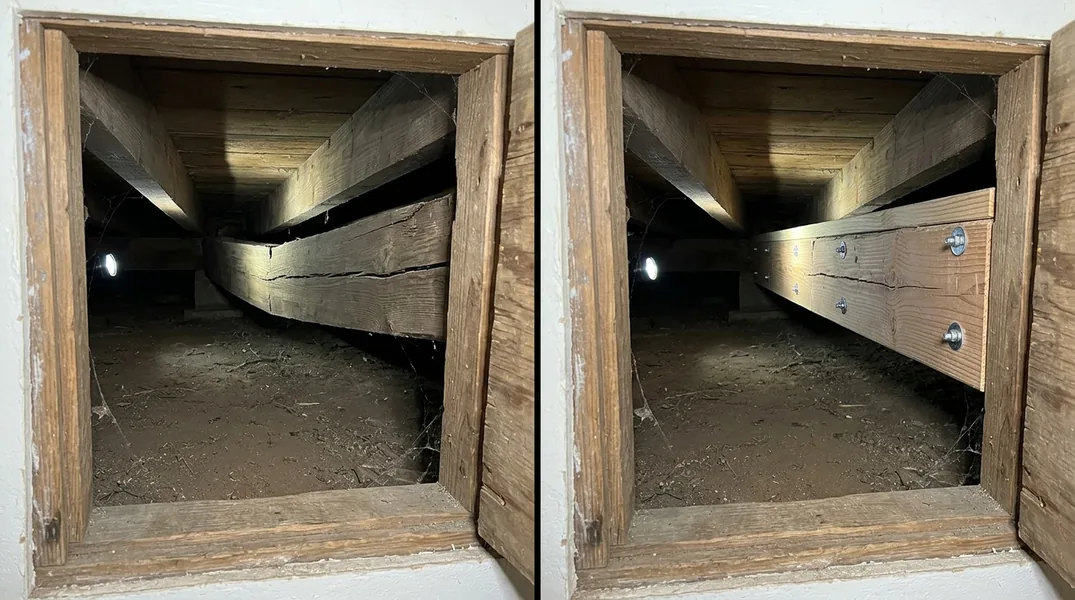
Structural carpentry in older Colorado Springs homes often means working with members that have settled, shifted and aged over decades. A sloping floor or sticking door in a house that is a century old is usually the normal result of slow, stable settling rather than active failure. What matters is whether something is still moving and how the member is performing where it bears load. We repair and replace floor joists by sistering sound joists alongside damaged ones, or by replacing sections of subfloor and rim joist where the wood no longer carries its share. Sill plates and rim joists at the foundation need attention when they have rotted or when the water path that caused the rot is still active. Sagging or undersized beams, and load-bearing walls that need to be removed or altered, are common in older houses where the original framing was modest or where a later remodel opened up a wall without adequate support.
Beam replacement and load-bearing wall removal commonly require engineered drawings and a permit from the local building department. We build to those drawings rather than produce them, beam sizing and load calculations are the work of a licensed structural engineer. Floor joist and subfloor repair may also require a permit depending on the scope and your local code, so it is worth checking before you start.
Finish Carpentry and Built-Ins in Colorado Springs Homes
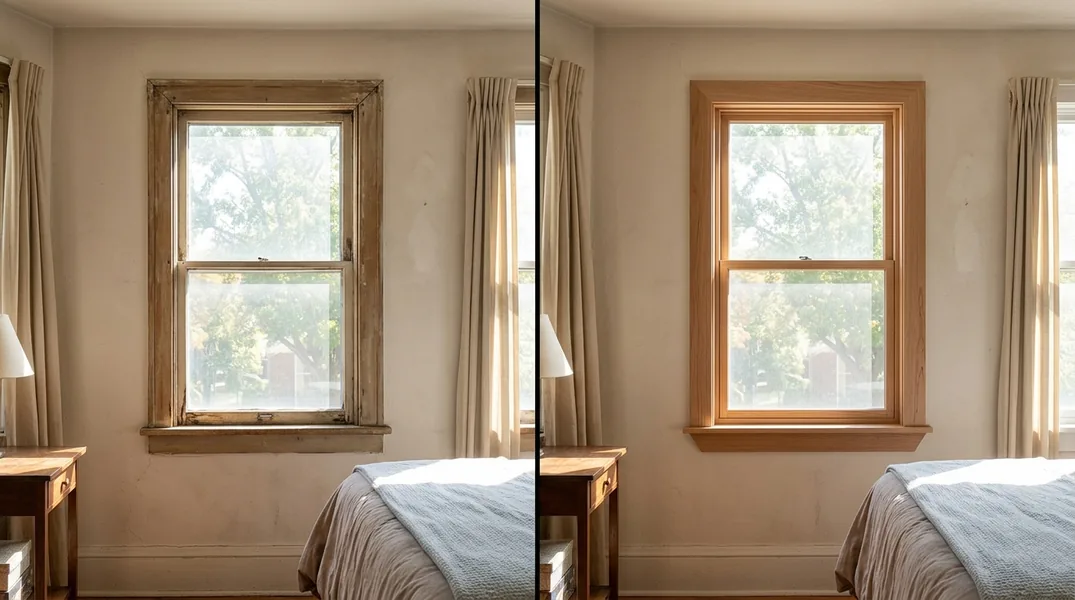
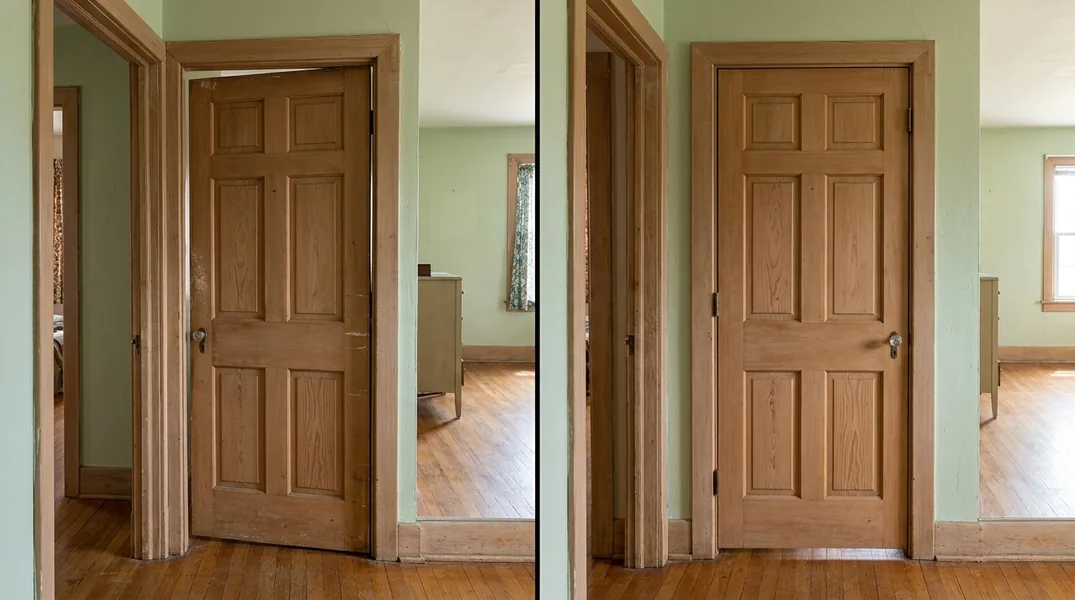
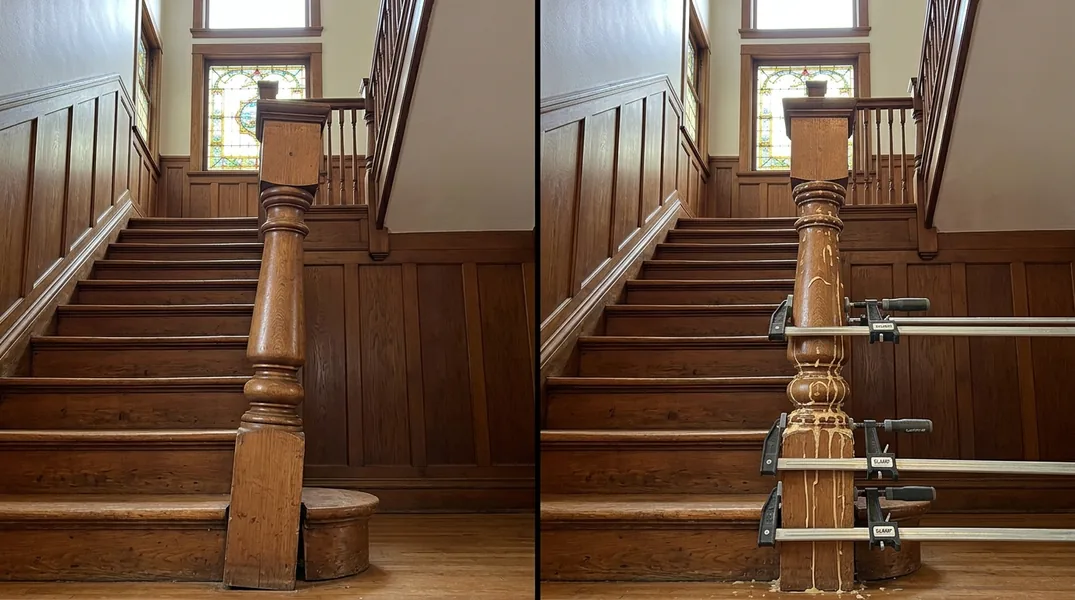
Finish carpentry is where the craft becomes visible. We install casing, baseboard and crown molding with coped joints instead of caulked corners, and we scribe trim to walls that are neither flat nor plumb, a common condition in older houses. We match existing period millwork rather than replacing it when the original profile is worth keeping. Custom built-ins and shelving are fitted to the actual dimensions and quirks of the space, not to a template. Cabinets and vanities are installed with consistent reveals and solid backing. Interior and exterior doors are hung true, and stairs and railings are repaired or rebuilt with attention to the original newel post, stringer and baluster detail.
Colorado Springs has a lot of bay windows, compact floor plans and out-of-square openings, especially in the Victorian and mid-century stock. These are the houses where finish carpentry matters most, because the work has to fit what is actually there, not what a level and square would prefer. That is the difference between carpentry and handyman work.
Permits, Repair-or-Replace & What We Do Not Do
In most jurisdictions, a permit is commonly required for structural work such as removing or altering a load-bearing wall, replacing beams or joists, and altering stairs or exterior decks. Requirements vary widely, and thresholds differ between municipalities. Always verify with your local building department before starting your project, we can help you understand what the code requires, but the permit itself is between you and the authority that has jurisdiction over your property. When you are deciding whether to repair or replace a damaged member, the honest criteria are straightforward: how much sound section is left, whether the water source can be closed, and what the two options cost. We quote both repair and replacement when both are real options, and we explain the trade-offs plainly.
We are fully insured, and we can help you document damage for an insurance claim if you have one. We do not offer structural engineering, mold testing, mold remediation, or pest treatment and extermination, those are specialized trades with their own licensing and scope. Requirements vary, always verify with the Colorado Springs building department before starting your project. If you have questions about what your situation requires, contact us and we will walk you through it.
Ready to get started? Colorado Springs Carpentry serves in Colorado Springs and surrounding areas. Book your free wood rot inspection today.
Get Your Free Wood Rot Inspection