Why Is My Floor Sagging? Common Causes in Older Colorado Springs Homes
If you've noticed your hardwood floors dipping or feeling soft underfoot, you're not alone. Sagging floors are one of the most common structural complaints in older homes throughout Colorado Springs. The culprit is rarely just one thing, but rather a combination of age, moisture, and the natural settling that occurs over decades.
The primary cause of floor sag is damage to the floor joists that support your home's weight. These horizontal wooden beams run beneath your floorboards and carry the load of everything above them. When joists weaken, warp, or deteriorate, the floor above sags noticeably. Wood Rot & Dry Rot Repair is often the underlying issue, particularly in basements and crawl spaces where moisture accumulates. Dry rot, in particular, eats away at wood from the inside out, making joists brittle and unable to support weight properly.
Another frequent culprit is inadequate support from the foundation or main beam. Older homes in Colorado Springs were sometimes built with undersized beams or insufficient support posts. As the home ages and the wood naturally settles and shrinks, gaps develop between the beam and the joists, leaving sections of floor with no support. Pest damage, particularly from termites or carpenter ants, can also compromise joist integrity, though this is less common in our dry Colorado climate than in other regions. Additionally, excessive moisture from plumbing leaks, foundation seepage, or poor ventilation creates the perfect environment for rot to develop.
Understanding Floor Joist Repair and Sistering Floor Joists
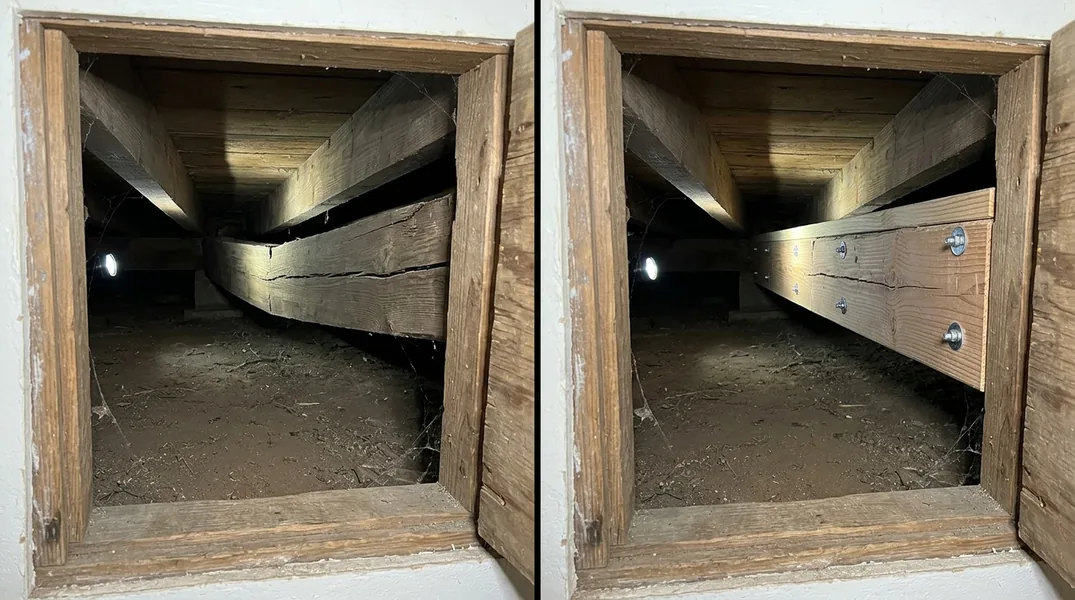
When a joist has begun to fail, repair options depend on the extent of the damage. Floor Joist & Subfloor Repair is a specialized carpentry skill that requires both structural knowledge and craftsmanship. The most common repair method for joists that are weakened but not completely rotted is sistering, a technique where a new piece of lumber is fastened alongside the damaged joist to share the load and restore strength.
Sistering floor joists involves selecting new lumber of the same dimension as the existing joist and bolting it firmly to the damaged one along its entire length. This doubled-up joist then carries the weight that the original joist can no longer handle. The process requires temporary support posts to lift the floor back to its original height before the sister joist is installed. This is critical because it redistributes the weight gradually and prevents further cracking in walls and ceilings above. The sister joist is typically attached with lag bolts spaced 16 inches apart, creating a solid unit that can last another 50 years or more.
However, not all damaged joists can be salvaged through sistering. If the joist is severely rotted, cracked, or has lost more than 30 percent of its cross-sectional area, it needs to be replaced entirely. Full replacement is more invasive and expensive but sometimes necessary to ensure structural integrity and safety. A professional carpenter will assess each joist individually to determine whether sistering is sufficient or if replacement is required.
Sagging Floor Repair Cost in Colorado Springs: What to Budget
The cost of sagging floor repair varies dramatically depending on the extent of damage, the number of joists affected, and whether the underlying cause (like wood rot) must also be addressed. For a single sistered joist in a modest-sized room, homeowners might expect to pay between $1,500 and $3,500. However, if multiple joists require repair or the subfloor itself is damaged, costs can easily climb to $5,000 to $15,000 or more. Full joist replacement, which involves removing the damaged wood and installing new structural lumber, typically costs 50 to 100 percent more than sistering.
One of the biggest variables affecting pricing is accessibility. If the damaged joists are in a basement with good headroom, repairs are straightforward and less expensive. If they're under a kitchen or bathroom with tight crawl space, the work becomes more difficult and time-consuming. Additionally, if the floor sag is caused by Wood Rot & Dry Rot Repair, that remediation must happen first, adding to the overall bill. Addressing the moisture source that caused the rot is equally important, whether that means installing a sump pump, improving ventilation, or repairing a plumbing leak.
The best way to understand your specific costs is to have a professional carpenter inspect your home and provide a detailed estimate. Colorado Springs Carpentry offers a free estimate for sagging floor repairs. We'll assess the damage, identify the root cause, and give you a transparent breakdown of labor, materials, and timeline. Call (719) 368-8936 to schedule your inspection today.
When to Call a Professional: Signs Your Floor Needs Immediate Attention
Not every slightly uneven floor is an emergency, but certain warning signs indicate you should call a carpenter right away. If you notice visible sagging (more than a quarter-inch drop over a 10-foot span), soft or bouncy flooring, or visible mold and moisture in your basement or crawl space, these are red flags that structural damage is underway. Doors and windows that stick or won't close properly, cracks in drywall or plaster, or a musty smell in lower levels often accompany floor problems and suggest moisture intrusion.
The longer you wait to address sagging floors, the more expensive repairs become. What starts as a single damaged joist can spread to adjacent joists as the load redistributes unevenly. Additionally, the longer wood remains wet or exposed to rot-causing conditions, the more extensive the damage becomes. If you've noticed any of these signs in your Colorado Springs home, a professional inspection is the smart first step. Colorado Springs Carpentry has repaired hundreds of sagging floors throughout the region and can quickly identify whether your situation requires emergency intervention or can be scheduled as a standard repair project.
The Repair Process: What to Expect from Start to Finish
A typical floor joist repair project unfolds in several stages. First, the carpenter performs a thorough inspection, often using a moisture meter and flashlight to examine the condition of all visible joists and the subfloor. Photos and measurements are documented, and the root cause of the damage is identified. This might involve checking for plumbing leaks, assessing crawl space ventilation, or looking for signs of past water intrusion. Once the assessment is complete, a detailed repair plan is created and presented to you with cost estimates.
Next comes preparation and support. Before any damaged wood is removed or new joists are installed, temporary support posts are placed to carry the floor load. This is crucial because it prevents the floor from sagging further and protects the structure above. Once supports are in place, damaged sections are removed and new lumber is installed. If sistering is the chosen method, the new joist is bolted to the old one. If replacement is necessary, the old joist is fully removed and a new one of matching dimension is installed.
The final stage involves removing temporary supports gradually, allowing the new joists to settle into their load-bearing role. The subfloor is inspected and repaired if needed, and any underlying moisture issues are addressed. This might include improving ventilation, installing a dehumidifier, or recommending gutter and drainage improvements. The entire process, from inspection to completion, typically takes one to three weeks depending on the scope of work.
Preventing Future Floor Problems: Maintenance Tips for Colorado Springs Homeowners
Once your floor has been repaired, protecting it from future damage is essential. The most important step is moisture control. Keep your basement and crawl space dry by ensuring gutters and downspouts direct water at least 6 feet away from your foundation. If you have a crawl space, ensure it's properly ventilated or consider installing a vapor barrier to reduce moisture accumulation. Check for plumbing leaks regularly, especially under bathrooms and kitchens, and fix them immediately if found.
Regular inspections of your basement or crawl space are another key prevention strategy. Once or twice a year, take a flashlight and look for signs of moisture, soft wood, or mold growth. Early detection of a small problem can prevent it from becoming a major structural issue. If you notice any concerning signs, contact a professional right away rather than waiting. Finally, consider having a professional home inspection every five to ten years, particularly if your home is over 50 years old. This can catch developing problems before they become expensive repairs.
Colorado Springs Carpentry is here to help with both emergency repairs and preventive maintenance. Whether you're dealing with active floor sag or want to ensure your home's structure remains sound, our team has the expertise to guide you. Contact us at (719) 368-8936 or visit our website to learn more about our services and schedule your free estimate today.
Looking for a professional carpentry contractor in Colorado Springs? Colorado Springs Carpentry responds fast for all your carpentry needs.
Get a Free QuoteOur services: Wood Rot & Dry Rot Repair · Termite Damage Repair · Floor Joist & Subfloor Repair